- AI can write a good training plan for a marathon or an IRONMAN – if you describe your real level honestly.
- AI cannot see you: your sleep, recovery, technique and life. A coach adjusts the plan to all of that, and keeps you accountable.
- Beginners need a coach most. Experienced athletes can use AI as an extra tool. The best result comes from a coach and technology together.
Can an AI coach replace a professional coach? Can you prepare for a marathon or an IRONMAN with artificial intelligence? And why would you need a coach at all, if technology can build a training plan in a few seconds?
These questions come up more and more. AI is developing incredibly fast, and what it can do is genuinely impressive. Here is my view as an athlete and a coach: what AI does well, where it falls short, and who should trust their training to whom.
What I mean by an "AI coach"
In this article, "AI coach" means any training plan written or adapted by software rather than by a person:
- AI chat assistants such as ChatGPT or Claude, which write a plan from your description;
- adaptive training apps such as JOIN, which adjust your plan after every session;
- built-in plans on platforms and devices – Zwift training plans, Garmin Coach and daily suggested workouts, Wahoo's training plans, and the new training features in Strava.
They work differently, but they share the same strengths and the same blind spots.
AI is a great training tool
Let me start by saying I am not against AI in sport at all. The opposite – I think we should use modern technology.
If you don't have the time, the wish or the budget to work with a personal coach, AI can be a very useful assistant. The key is to give it a clear task and honest, accurate information about yourself.
For example, you want to run your first marathon in six months, or finish an IRONMAN in a year. You could write:
"I want to prepare for a marathon in six months. My current level is… I can train five times a week, about seven hours in total. My recent results are… Help me build a gradual plan that includes recovery."
AI can then suggest a complete programme: running sessions, strength work, recovery, a gradual increase in load and a taper before the race.
It can also help with many related questions:
- choosing build-up races;
- explaining the principles of training;
- making sense of your sports watch and training data;
- suggesting which check-ups to discuss with your doctor;
- helping you understand test results – without replacing a medical consultation;
- advice on equipment: running shoes, a bike, cycling shoes, a helmet;
- the basics of nutrition and recovery.
That is a huge amount of useful information, available to almost everyone. If the choice is between chaotic training with no understanding of the process and a well-built AI plan, I clearly see the advantage of the second.
But there are important nuances.
Writing a plan is not the same as preparing an athlete
For me, the biggest difference between a coach and AI is not the plan itself. It is what happens after the plan is written.
AI can create a programme. But does it know how you actually did the session? Did you sleep well? Did you recover from yesterday? Is fatigue building up? Has something changed in your life?
Unless you tell it, or use an integrated system, it simply doesn't know. A good coach analyses the athlete's state all the time.
Imagine you are a young mum. Your baby wakes you up at night, you sleep badly, you have a lot to do at home. Can you train on the same programme as someone who sleeps eight hours, eats well and has plenty of time to recover? Of course not.
An experienced coach sees this. If you did two hard sessions and didn't recover, the coach can turn the next session into an easy one, or give you a rest day.
A coach adapts the training to your life. It doesn't force your life to fit the training plan.
Individual means much more than age, weight and heart rate
Take two athletes of the same age, the same weight and roughly the same level. Do they need the same training? Not at all.
One is naturally faster, the other has more endurance. One handles big volume easily, the other needs a more careful approach. One recovers quickly from intensity, the other needs much more time. Different jobs, sleep, nutrition, bodies – and different reactions to load.
A good coach takes all of this into account: when to add volume, when to add intensity, when to plan an easy week and how to bring you to race day in your best shape.
This matters even more when you have several races in a season. Together with your coach you decide which race is the main goal, which are build-up races and which are simply part of training – and the season is periodised around that.
And when life changes the plan – say you missed two sessions in a row because of work or family – what then? Make them all up? Carry on as planned? Reduce the load? An experienced coach looks at the situation and decides.
Real preparation is not a set of workouts. It is managing load, recovery and form.
A coach sees what the plan doesn't show
Today athletes have watches, heart rate monitors, power meters, GPS and TrainingPeaks. A coach can see your pace, heart rate, power, duration and volume.
But the most important skill is interpreting this data in the context of one specific athlete. A coach notices when a familiar session suddenly feels much harder, when you are not recovering, or when your response to training has changed. And then the coach doesn't just look at the numbers. They ask:
"How do you feel? Why was today hard? How did you sleep? What has changed?"
Based on your answers and the data, the training is adjusted. AI systems can also analyse training data if they have access to it. But without reliable information about how you feel, your technique and your life, their conclusions can be incomplete.
Technique: another big advantage of a coach
You can write a beautiful running plan – but what if the person runs badly? Weak foot muscles, poor core stability, coordination problems?
An experienced coach sees this and gives the right exercises. The same goes for swimming and cycling. Even if you work with a coach online, you can send videos of your running, swimming or riding. The coach analyses the movement, spots the mistakes and doesn't just say "your technique is wrong" – they give you specific work to fix it.
AI with video analysis can also make comments and suggest drills. But the accuracy depends on the video quality, the system and how the result is interpreted.
A training plan builds fitness. Good technique helps you use it.
The biggest danger for beginners: overestimating yourself
This is the point I most want to make.
Some people have never done endurance sport seriously, but are sure they can run a marathon or finish an IRONMAN without much trouble. Someone who has been going to the gym, feels strong and decides: "In six months I'll run a marathon in three hours." Or: "I'll prepare for a full IRONMAN and finish it in nine hours."
They ask AI for a plan. AI asks about their current level. The answer: "Intermediate. I'm strong and sporty, I can easily run 10 km." In reality, they may never have run 10 km without stopping.
AI builds a plan for the level described – not the real one. The person starts sessions designed for a much fitter athlete. The result: extreme fatigue, heavy muscle soreness, overload of joints and tendons, and a high risk of injury. With some health conditions, excessive load can be even more dangerous.
Gym strength does not mean you are ready for a marathon or an IRONMAN. These distances need specific endurance and a gradual adaptation of muscles, tendons, ligaments and the cardiovascular system.
An experienced coach doesn't have to take your word for it. They can assess your real level from your training history, tests, technique and how you react to the first weeks of training – and only then set realistic goals.
AI can write a perfect plan for the athlete you described. But what if that athlete only exists in your imagination?
Beginners don't always know what load they need
If you are just starting to run, you may not know even the basics. How to warm up? How many kilometres? How fast? How many times a week? When to rest? And above all – why should this session come after that one?
A beginner can get a plan and do it far too hard – seven sessions in a row, having done almost no sport before. The body is not ready: heavy soreness, accumulated fatigue, a high risk of overuse injuries.
A good coach knows that a beginner doesn't just need load. They need the body prepared for that load, step by step. The goal is steady progress, not the maximum number of sessions.
A good session is not the one after which you can barely walk. It is the one that makes you stronger and lets you recover.
For experienced athletes, AI can be especially useful
The situation is completely different for someone who has trained for years. They have worked with different coaches, tried different methods, understand periodisation and know their own body. They can tell normal fatigue from too much, and they know what works for them.
Such an athlete can use AI as an extra tool: ask for several versions of a training block, compare them, understand the pros and cons, explore new approaches to endurance, intensity, strength and recovery – and then judge for themselves what fits.
The key difference: an experienced athlete understands what is being suggested and can evaluate it critically. A beginner often doesn't even know which questions to ask.
A coach also means discipline and motivation
There is one more big advantage of a coach that people rarely talk about. A coach asks questions. All the time.
"How was the session?" "Why didn't you do it?" "How was your week?" "Why did you change the workout?" "How do you feel?"
Sometimes it feels like your coach is driving you mad with questions. But it is an important part of the process.
An AI plan is easy to start breaking. Bad weather today – no run. No mood tomorrow – skipped. The day after, intervals become an easy jog. Then something else changes. Slowly even a good plan stops working, because the system is gone.
With a coach there is accountability. You know they will look at your work, ask about missed sessions and discuss the result. That builds discipline – for beginners and experienced athletes alike.
Of course, a good coach must tell ordinary laziness from real fatigue, illness or the need to recover. Sometimes an athlete needs a push to do the session. Sometimes they need to be convinced to rest.
AI can write a workout. A coach helps make the training actually work.
Why a coach's experience matters
I especially value a coach who has been through a serious sports school themselves.
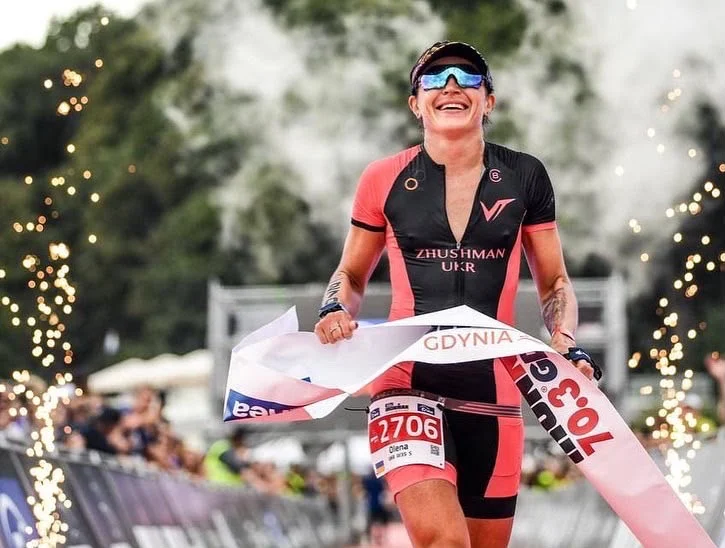
Imagine someone with 20–25 years of professional sport behind them. They have done hard training blocks, prepared for championships, lived through failures, injuries, fatigue and peak form. They know from their own experience what big loads and recovery feel like.
If that person has also coached many athletes for years, their experience becomes much wider. They have worked with people of different ages, levels and abilities. They have seen one method work brilliantly for one athlete and fail completely for another.
Of course, years in sport or titles alone don't make someone a good coach. But professional knowledge, personal experience as an athlete, a track record as a coach and the ability to work with people – together, that is enormously valuable.
A good coach doesn't just know which workouts exist. They know who needs them, when, why and how much.
The human relationship can't be reduced to numbers
For me, working with a coach is not only training, heart rate, pace and power. It is also a human relationship.
A coach knows your character, your strengths and weaknesses, your fears and ambitions. They know when to support you, when to push you and when to stop you. Sometimes an athlete doesn't need a new plan – they need a conversation. Sometimes, confidence that they are doing everything right. Sometimes, someone who says: "Rest today. You've done enough."
That is what builds trust between coach and athlete. And trust is a big part of long-term preparation.
So who is better – a coach or AI?
My position is simple: I prefer working with a knowledgeable, experienced coach. Because a coach is not just someone who writes a plan. It is an individual approach, constant monitoring, analysis, technique work, smart load management, motivation, discipline and human support.
A coach matters most for beginners – people who don't know their body yet, don't understand the principles of training and may overestimate what they can do.
At the same time, I am not against AI. It is an excellent tool that can already help athletes a lot. For experienced athletes it can be a great assistant. For those who can't or don't want to work with a coach, it is a useful alternative to training completely on your own.
Just remember: the quality of the advice depends on the quality of the information you give, and on your ability to judge the answer. Don't overestimate yourself. Don't follow any programme blindly. Listen to your body, and remember that preparation is a long-term process.
My conclusion
The world is moving. Technology is moving. We need to move with it.
I don't think you have to choose only between a coach and AI. The most promising direction is a combination of professional coaching experience and modern technology. AI can give you information. An experienced coach turns that information into a training process built around you.
In the end, it doesn't matter who wrote your plan. What matters is that it makes you stronger, keeps you healthy, lets you enjoy your sport and gets you to your goal.
– Olena Zhushman
About the author
Olena Zhushman is a running and triathlon coach at Portcycling Performance Camps. Master of Sport of International Class in athletics, multiple Ukrainian champion and ten years on Ukraine's national athletics team, with an 800 m best of 1:59.32. In triathlon she is an IRONMAN 70.3 age-group winner (Agadir 2026, Costa Navarino 2025).
Triathlon and running camps are coming to Portcycling Performance Camps – the same approach as on the bike: real coaches, real numbers, real progress. More very soon. Meanwhile, see our cycling camps.
Training on the bike? Read our cycling take: AI cycling coach vs human coach and Do you need a cycling coach?
FAQ
Can an AI coach replace a running or triathlon coach?
Can I use ChatGPT or an AI app to build a marathon training plan?
Is an AI training plan safe for an IRONMAN beginner?
Who benefits most from AI in training?
Keep reading
AI Cycling Coach vs Human Coach: When Each One Makes Sense
AI training apps are good at some things and blind to others. When an AI cycling coach is enough, when you need a human – and how to get the best of both.
Read →Do You Need a Cycling Coach?
What a cycling coach does, who needs one and when riding alone is enough. Honest answers on plans, testing, technique and the mistakes coaches prevent.
Read →How to Plan Your Cycling Season
Build a cycling season that peaks when it matters: pick A, B and C goals, work backwards, plan base, build and peak blocks, testing, camps and recovery.
Read →